

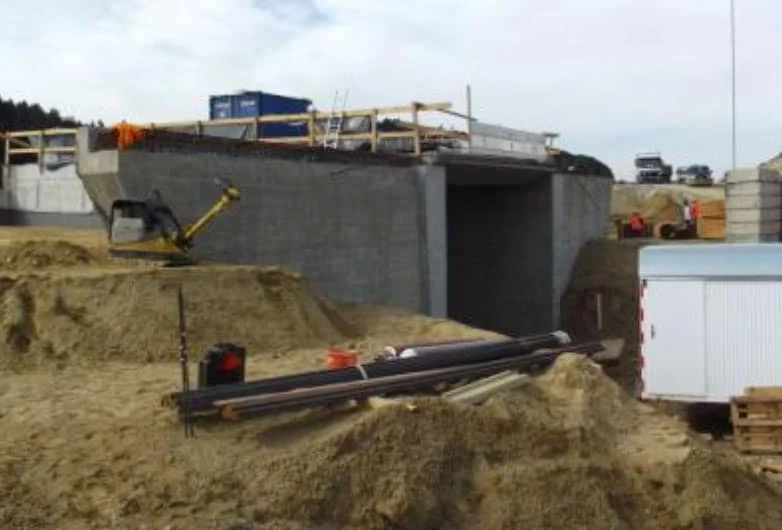
The neighbouring building in view, from the baseline measurement on.
Excavation, ramming and demolition affect adjacent buildings. Construction site monitoring tracks cracks, vibration to DIN 4150-3 and settlement in real time and seamlessly documents the condition over the whole construction phase, as the basis for condition surveys and evidence protection.
Benefits for construction & development
Build safely without losing sight of the neighbourhood
Excavation, ramming, vibratory compaction and demolition affect adjacent buildings. Accompanying monitoring detects critical effects early and documents the condition over the whole construction phase.
Request a quoteDe-escalate neighbour disputes
If a neighbour claims damage, the data decides. Fully documented readings show objectively what actually happened during the construction phase, and take the ground away from arguments.
Standards-compliant vibration assessment
We assess vibrations against the guide values of DIN 4150-3. If the values for the respective building class are reached, the system triggers an automatic alert before damage occurs.
Baseline measurement as the starting point
Before the first intervention, we record the baseline condition of the neighbouring building. This baseline measurement is the objective reference point against which every later change can be clearly read.
Wireless, without mains power
The sensors are fitted without cabling and without mains power and transmit the data via NB-IoT. This lets even a third party’s neighbouring building be included without structural intervention.
Over the construction phase
Accompanying monitoring from the first to the last reading
From the baseline measurement before construction starts, through real-time monitoring during the works, to complete documentation after completion.
Before construction starts
Baseline measurement as an objective starting point
Before the first excavator arrives, we record the condition of adjacent buildings: existing cracks, tilt and position. This baseline measurement is the reference against which all later values are measured, and the foundation for the condition survey your expert builds on.
During the construction phase
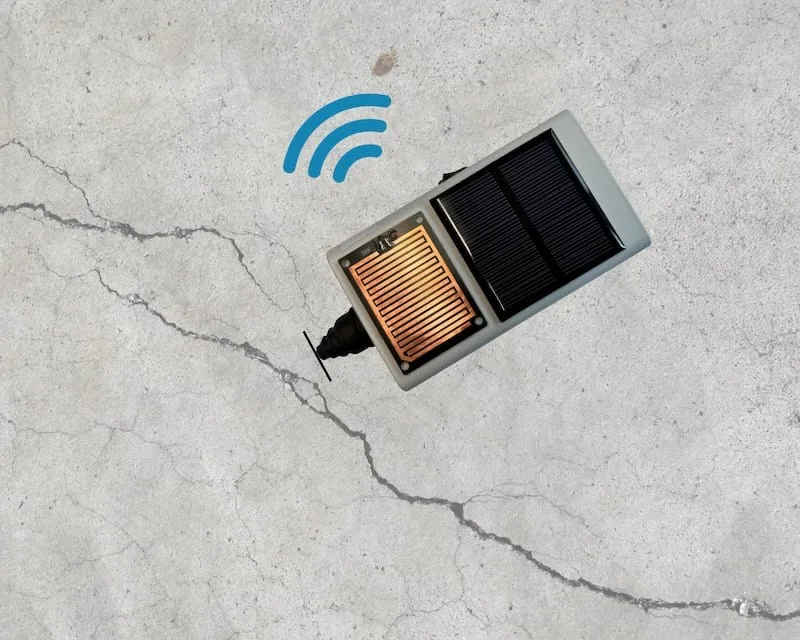
Cracks, vibration and settlement in real time
Sensors continuously monitor crack widths, peak particle velocity and tilt. If a value approaches the defined threshold, your site management and the responsible staff are alerted immediately, around the clock and without manual on-site checks.
Go to crack monitoring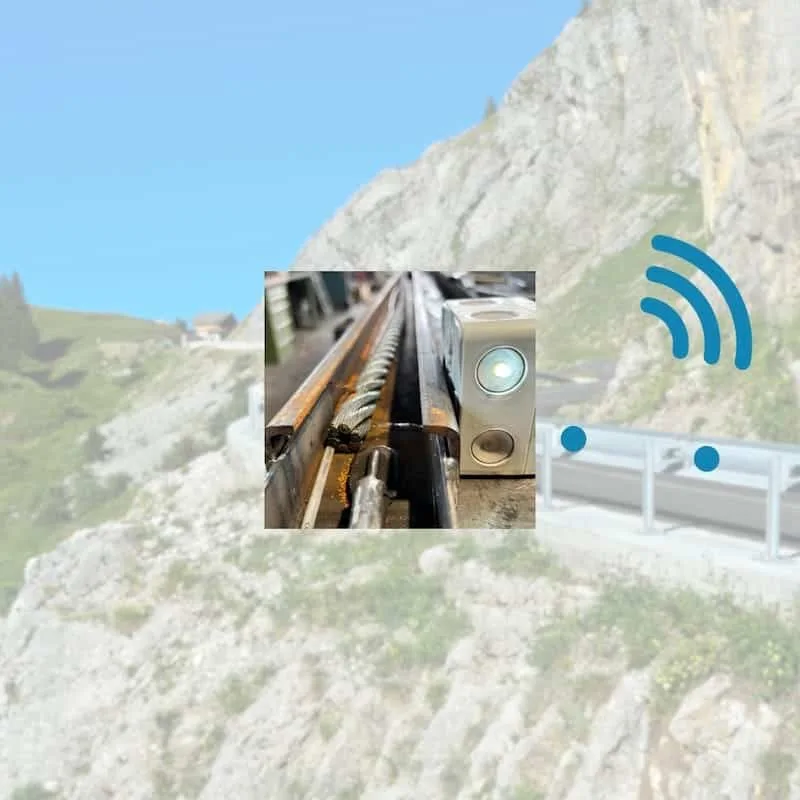
After completion
Complete documentation of the construction phase
All readings come together as a traceable time series. After completion, a solid documentation is available that proves the condition of the neighbouring building over the whole construction process, from the baseline measurement to the last reading.
Go to tilt monitoringVibration to DIN 4150-3
Thresholds depend on the neighbouring building
The same vibration is uncritical for an industrial building and already too much for a particularly sensitive building. DIN 4150-3 grades the guide values by building class. Choose a class and trigger a ramming impact.
-
Assessed by building class
The right guide value applies to every neighbouring building, not one flat value for all.
-
Alert before the damage
If peak particle velocity approaches the threshold, an alert is triggered immediately.
-
Seamlessly recorded
Every spike stays documented and traceable as a time series.
Peak particle velocity
Simulated ramming impact, peak 8 mm/s
Guide value exceeded
Alert sent to site management
Guide values apply at the foundation in the lower frequency range (1 to 10 Hz) and rise towards higher frequencies. The illustration is indicative, the measurement concept is defined on a project basis.
What we measure
The right measuring quantities for your construction project
Depending on the construction method and neighbouring building, we combine the right sensors into a measurement concept on one platform.
Crack widths
Existing and newly forming cracks on the neighbouring building are captured continuously and to the millimetre.
Vibration
Peak particle velocity to DIN 4150-3, assessed according to the building class of the respective neighbouring building.
Settlement & tilt
Tilt sensors and distance lasers capture the smallest shifts and settlements in real time.
Moisture, optional
If needed, we add moisture and concrete monitoring on adjacent components.
These measuring quantities concern the neighbouring building. For your own component, there is the construction phase before that: temperature, maturity and strength in fresh concrete turn the formwork removal date into a calculation instead of a guess, which concrete maturity monitoring takes care of.
From the measurement concept to operation
Your monitoring, complete from one source
You get a complete solution, not separate parts: from concept through installation to operation and alerting, with one point of contact over the whole construction period.
Concept
Together with you, we define which neighbouring buildings are included, which measuring quantities and thresholds apply, and how the monitoring fits into the construction schedule and approval.
Learn moreInstallation
Sensors and gateways are fitted without cabling and without mains power and commissioned with a documented baseline measurement.
Learn moreMaintenance and operation
We keep the technology running over the whole construction period, check data quality and adjust thresholds to the construction schedule as needed.
Learn moreMonitoring and alerting
Values come together continuously in the platform; site management and responsible staff are alerted immediately when thresholds are exceeded.
Learn moreFrom practice
Bridges in Neu-Ulm during construction works
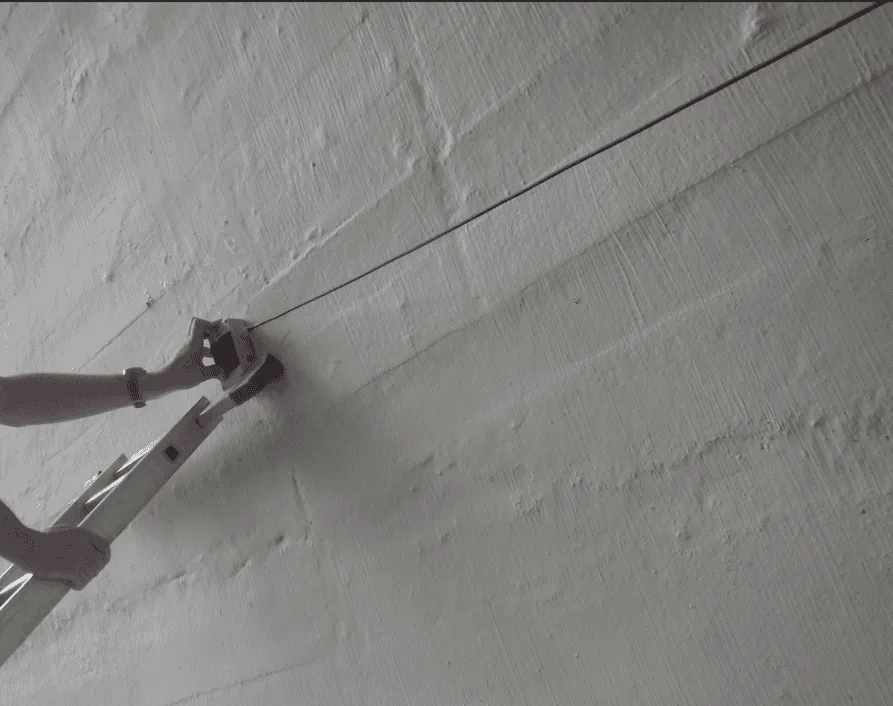
In a railway environment, we accompanied existing and auxiliary bridges through the construction phase: tilt sensors captured the smallest changes in structural behaviour, distance lasers monitored settlement in the vertical plane. The data flowed in real time via a gateway and gave the engineers a solid basis for fast decisions.
Baseline measurement
before construction starts
Measurement rate
set by task
Settlement
via distance laser
Tilt
via sensor
Transmission
gateway on site
Documentation
seamless time series
Matching sensors
This sensor technology accompanies the construction measure
Vibration, settlement and crack width on the neighbouring building come from these devices.
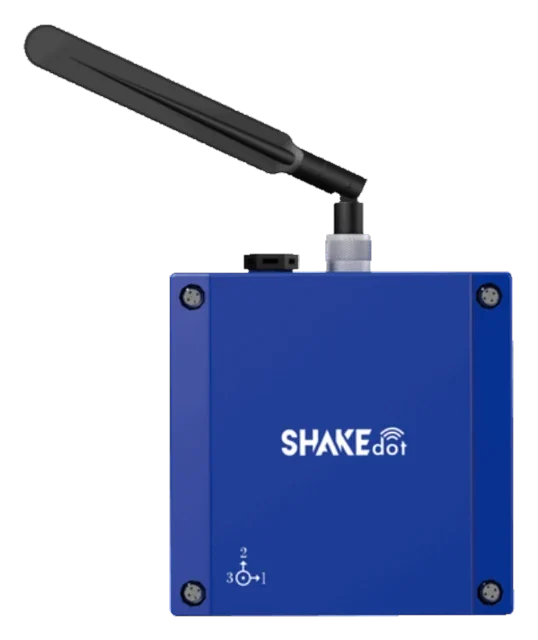 ProductsVibration sensor SHAKEdotThree-axis vibration measurement to DIN 4150-3, autonomous for up to six months.
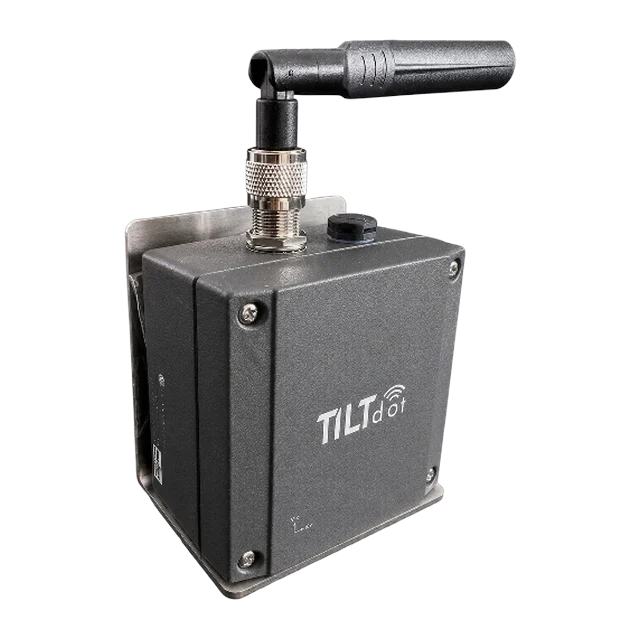 ProductsTilt sensorTilt and settlement of load-bearing components from 0.001°, gateway integrated.
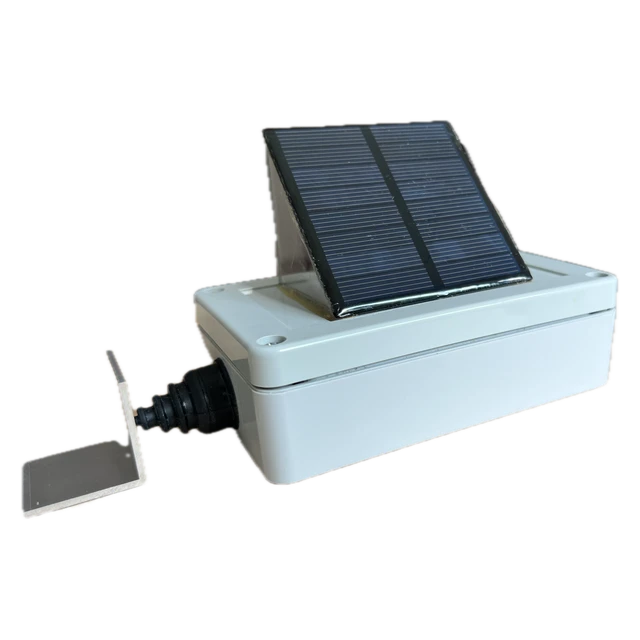 ProductsCrack sensorCrack width with 0.003 mm resolution, available with solar, long-life battery or mains power.
Data platform
All readings on one platform
The sensors transmit their readings wirelessly to the data platform, where they are evaluated, documented and continuously checked against your thresholds.
- AI-assisted data analysis
- User-focused reporting
- Continuous evaluation
- Warning and alarm thresholds
- Alerts by email and text message
- Remote access around the clock
- AI-assisted data analysis Condition within limits
- User-focused reporting Report ready
- Alerting Thresholds monitored
Condition surveys for your construction project
Tell us about the construction measure and the neighbouring building. We align the baseline measurement, thresholds to DIN 4150-3 and the documentation with your construction schedule.
 Benedikt Seuss
Basis for decisions
What you can decide on the construction site
In the construction process it comes down to vibration, settlement and the question of who is liable for a crack in the neighbouring building.
- 01
Adapt the construction method instead of risking damage
If vibration exceeds the guide values to DIN 4150-3, the method must change. The measurement says when and by how much.
- 02
Prove or rebut neighbours’ claims
A baseline measurement before construction starts and a complete trend afterwards clarify whether a crack originates from the construction measure.
- 03
Keep building or stop
If the neighbouring building moves, the decision on a construction stop is a matter of hours. Automatic alerting creates the time for it.
- 04
Condition surveys without permanent presence
Instead of regularly bringing an engineering firm to the site, the sensor technology documents continuously and traceably.
- 05
Secure construction time and claims
A documented trend shortens the discussion when claims arise after completion.
Frequently asked questions from construction & development
Why is a baseline measurement before construction starts so important?
Which standard applies to vibration in construction?
What happens if neighbours claim damage after the construction phase?
Does the sensor technology on a third party’s building need mains power or cables?
How quickly am I alerted to critical values?
Is the monitoring also suitable for a railway environment?
Project inquiry
Secure your construction phase
Tell us about the construction project and the neighbouring building. You will receive a solid initial assessment shortly, including suitable measuring quantities, thresholds and sensors.
+49 6742 8599600 DE +41 41 670 00 11 CH info@infrasolute.com