

Tilt monitoring: keep tilt and settlement of structures under control
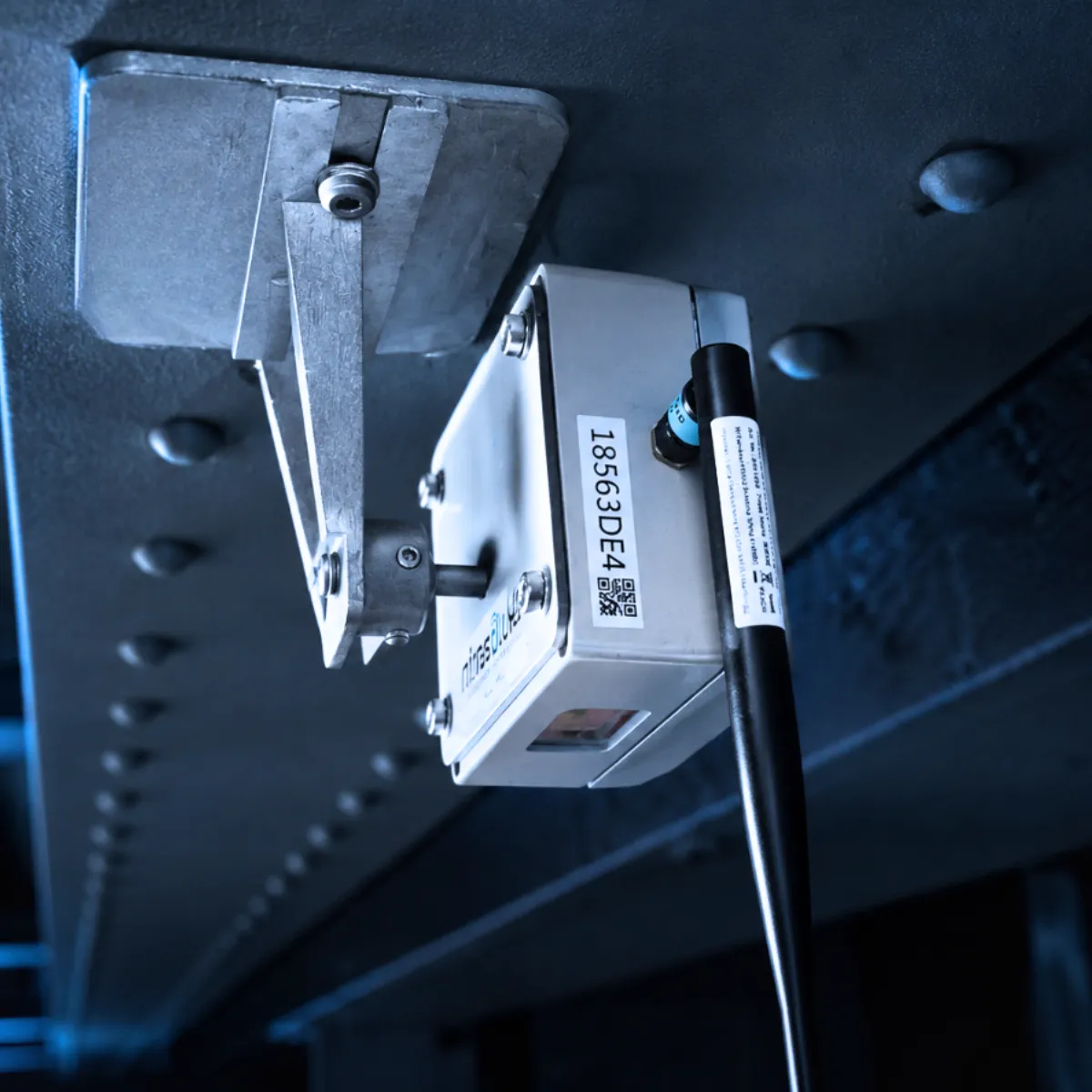
Tilt and settlement monitoring with high-precision sensors: you capture angle changes from 0.001° and settlement from 0.1 mm in real time, and detect movements in structures, slopes and retaining walls before they become critical.
Your benefits
Make settlement and tilt visible before they become a problem
Settlement develops slowly, is often uneven and stays below the threshold of visible damage for a long time. A few millimetres decide between serviceability and safety.
Request a quoteMaximum precision
The tilt sensor captures angle changes in the range of ±0.001°. Combined with the laser systems used, settlement is resolved down to 0.1 mm. This precision is enough to reveal movements that conventional surveying can barely detect during ongoing operation.
Real time instead of after the fact
Continuous, low-latency data transmission shows developments immediately. You spot critical trends as they emerge, not at the next scheduled survey.
Reliable in any weather
Built-in temperature compensation delivers reliable readings from -40 °C to +85 °C. The rugged design is built for construction sites and heavily used track sections.
Data in the online portal
All readings are available at any time in the online data portal, visualised and stored as a history. This keeps both even and uneven settlement fully in view.
How it works
The tilt sensor as the core component
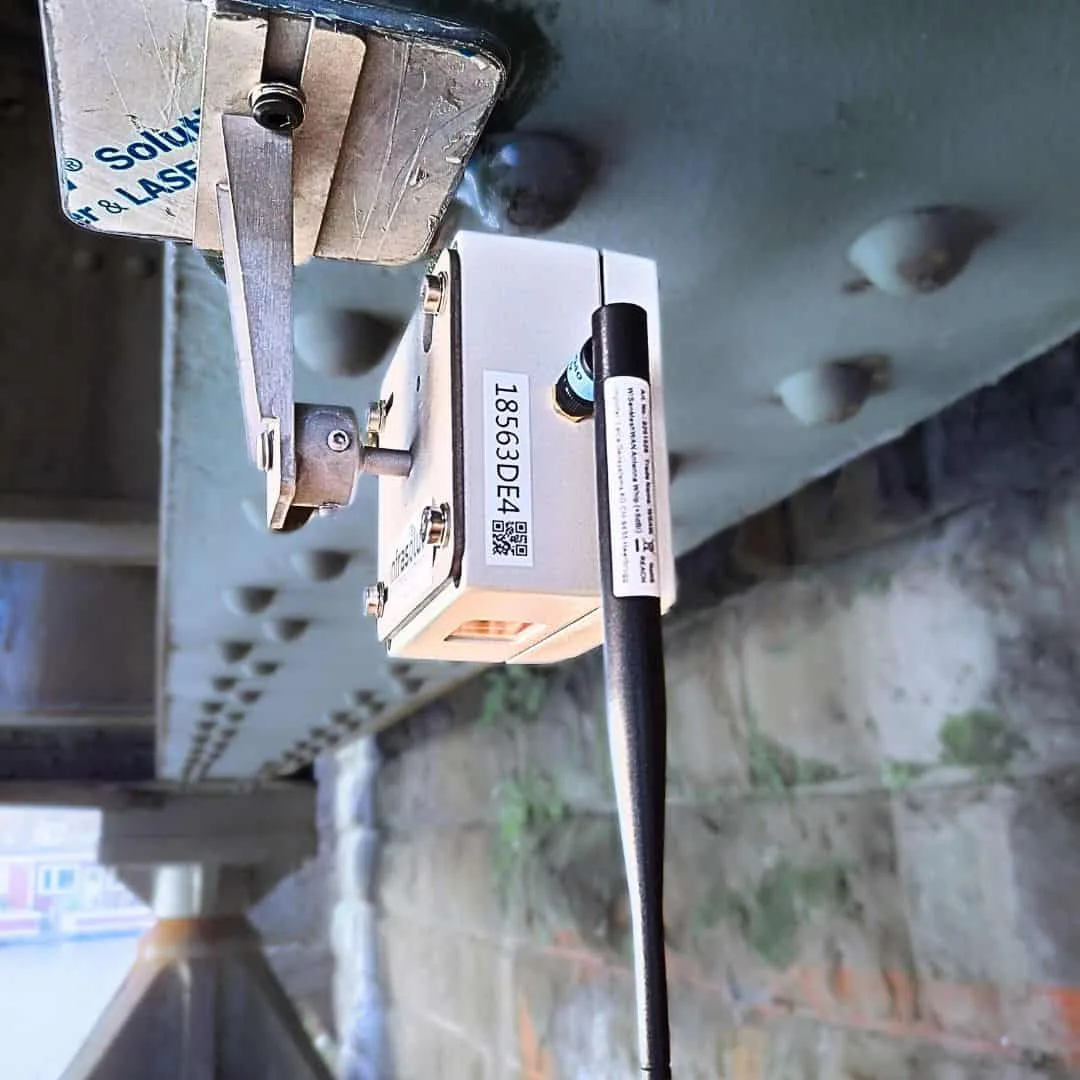
It measures a structural element's orientation relative to gravity and detects as soon as it tilts out of its resting position. Combined with laser systems, this produces a precise, permanent picture of the change in position, without a surveying crew needing to attend.
- 01
Fixed connection
The tilt sensor is permanently fixed to the structural element, for example a pier, a wall or a sleeper, and measures its orientation relative to gravity.
- 02
Precise detection
At ±0.001°, even minimal tilting movements are detected long before they would be visible to the eye or a spirit level.
- 03
Laser for settlement
High-precision laser systems additionally measure elevation. This gives a complete picture of even and uneven settlement down to 0.1 mm.
- 04
Alert at threshold
Stored thresholds alert you immediately to critical developments, so you can react instead of waiting for the next survey.
Experience the precision
When a structure tilts, every thousandth of a degree counts
Uneven settlement is dangerous because it twists a structure. Start the settlement scenario and see how the sensor captures an incipient tilting movement long before it is visible to the eye.
Tilt
0.000°
Settlement
0.0mm
Threshold exceeded
Uneven settlement detected, alarm triggered
Two sides of a movement
Tilt and settlement viewed together
If a structure sinks more on one side than the other, tilt results. That is why Infrasolute combines high-precision laser systems and tilt sensors, for a complete picture of the kinematics.
Angle
Tilt monitoring
Captures the angular change of a structural element, in other words whether and how far it is tipping. Even minimal tilting movements become visible at ±0.001°.
Elevation
Settlement monitoring
Measures the vertical drop, in other words how far a structure is sinking into the ground. Distance lasers resolve settlement down to 0.1 mm.
Redundancy
Combined kinematics
Together, both values give a complete picture of the movement. Only this makes it possible to clearly separate uncritical settling from structurally relevant movement.
The redundancy of laser and sensors increases the reliability of the results and makes them more robust against local disturbances. In addition, the condition of the concrete can be captured via concrete monitoring, and crack progression via crack monitoring.
Single source
One point of contact for the whole monitoring project
From selecting the right sensors through setting the thresholds to ongoing evaluation in the online portal, we support you through the entire project, as a complete solution, not individual parts.
- 01
Concept
We align sensors, laser systems and measuring points with the critical points of your structure.
Learn more - 02
Installation
On request, we fit the sensors to the structural element and commission the monitoring system.
Learn more - 03
Maintenance and operation
We keep the sensors operational, check their function and adjust thresholds as needed.
Learn more - 04
Monitoring and alerting
We continuously observe tilt and settlement and report every critical development immediately.
Learn more
Matching product
The tilt sensor for this measurement task
At the heart of the monitoring system is the tilt sensor. It monitors tilt and settlement wirelessly and in real time, and reports safety-relevant changes before they become critical.
Tilt sensor for structures
We align configuration, sensor count and price with your measurement task as part of the project inquiry.
- Measured variables
- Tilt and settlement
- Tilt measurement
- from ±0.001°
- Settlement detection
- down to 0.1 mm (distance laser)
- Temperature range
- -40 °C to +85 °C
- Data transmission
- real time, low latency
- Evaluation
- online data portal
Typical applications
Flexible to deploy, tailored to the application
Wherever a few millimetres of movement decide serviceability and stability, and a continuous data series is needed.
- Existing structures with suspected settlement
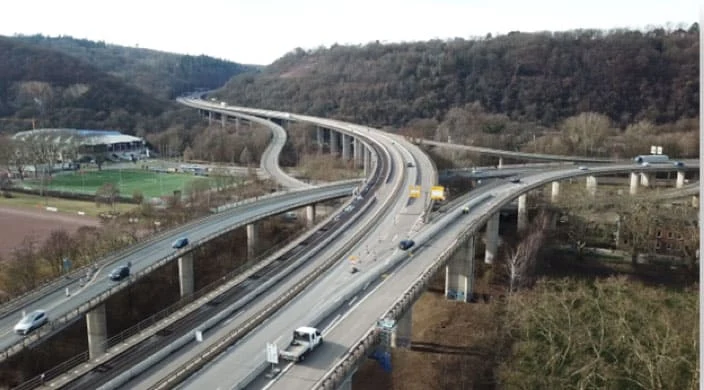
- Temporary bridges and auxiliary structures
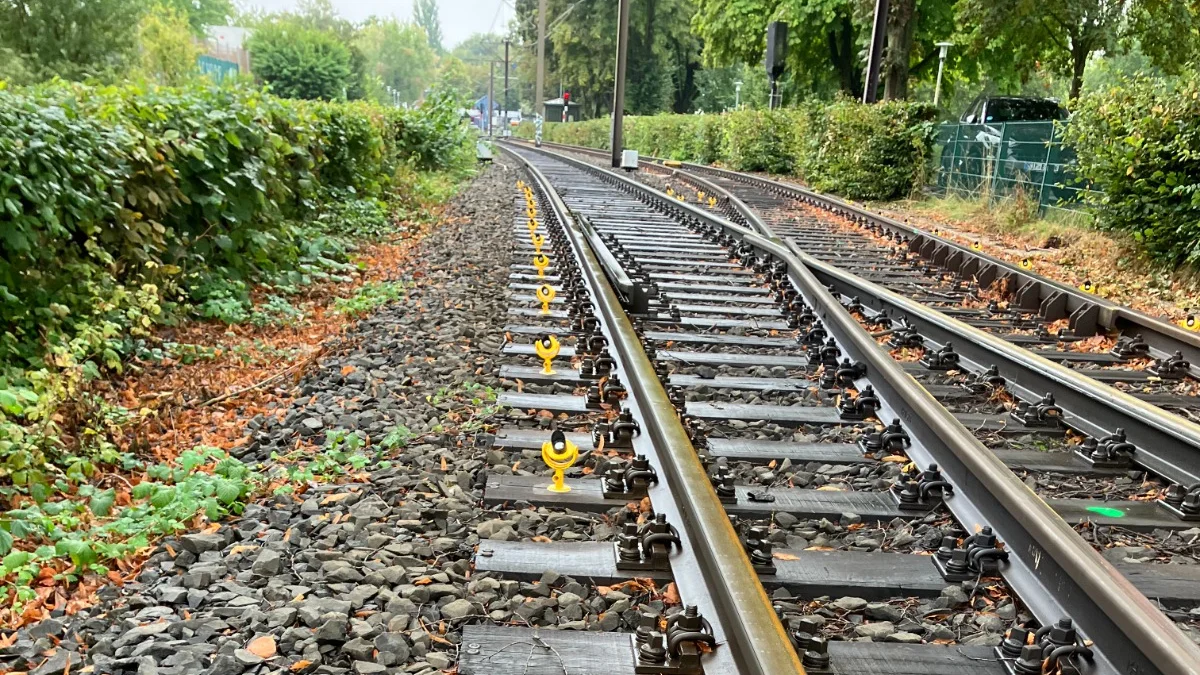
- Railway sleepers and track infrastructure
- Retaining walls, slopes and embankments
- Structures adjacent to civil engineering works
Ground and slope movement
Settlement measurement on slopes and retaining walls
An incipient tilt of a retaining wall or a slow-creeping slope can only be detected early with precision measurement technology. This continuous data series is especially critical for slopes that become active after heavy rain.
To the Slopes & Guardrails industryRailway applications
Monitoring to RIL 804.4111
The systems meet high technical standards and are suitable for applications under Deutsche Bahn's guideline RIL 804.4111, for example deformation monitoring of railway sleepers and monitoring of auxiliary bridges. This eases acceptance and documentation with railway operators.
To the Rail & Railways industryFrom practice
Tilt monitoring for your structure
Whether a structure, a slope or a retaining wall, we align sensors and measuring points with your task, so you get a reliable, continuous picture of the movement.
 Roman Koch
Data platform
All readings on one platform
The sensors transmit their readings wirelessly to the data platform, where they are evaluated, documented and continuously checked against your thresholds.
- AI-assisted data analysis
- User-focused reporting
- Continuous evaluation
- Warning and alarm thresholds
- Alerts by email and text message
- Remote access around the clock
- AI-assisted data analysis Condition within limits
- User-focused reporting Report ready
- Alerting Thresholds monitored
Frequently asked questions about tilt monitoring
How accurate is an Infrasolute tilt sensor?
What is the difference between tilt monitoring and settlement monitoring?
Does tilt monitoring also work at extreme temperatures?
Can I retrofit settlement monitoring to an existing structure?
Is the system suitable for railway applications?
How quickly do I detect a critical change in tilt?
Project inquiry
Let's talk about your structure
Tell us about the situation and the critical points. You will receive a reliable initial assessment at short notice, including suitable measured variables and sensors.
+49 6742 8599600 DE +41 41 670 00 11 CH info@infrasolute.com