


Monitor swimming pools, before the basin has to close.
Between tile and concrete lies the layer that determines the watertightness of the basin. You can never see it. Sensor technology in the joint mortar reports penetrating water while the repair can still stay localised.
Your benefits
The pool stays open because the damage stays small
A pool cannot be closed for a few days. Every refurbishment at the basin is an operational shutdown, and that costs more than the construction work itself. That is why early detection of damage is what counts.
Request a quoteAvoid closure periods
Water ingress detected early can be repaired on a localised basis. Detected late, it becomes a full refurbishment with complete closure.
Make the budget plannable
Whoever knows the condition of the waterproofing puts maintenance into the budget instead of the emergency reserve.
Protect the building fabric
Chlorinated water attacks reinforcement steel and concrete. Early detection keeps the attack where it is still repairable.
Document operator duties
A continuous measurement series documents that the structure condition was observed, instead of relying on visual inspections.
What is at stake
Four things that can go wrong in the basin
Water ingress stays invisible
Chlorinated water penetrates the construction through microscopic cracks. It only becomes visible when it emerges again elsewhere.
The steel corrodes out of sight
Aggressive chlorinated water attacks reinforcement steel and concrete. This can go as far as affecting structural stability.
Refurbishment hits operations
Late-detected damage often requires complete closure and a costly full refurbishment.
The condition is unknown
Without monitoring there is no information about the waterproofing layers, only an impression from the surface.
Matching solutions
What can be monitored in the pool
For the basin itself there is a solution developed specifically for it. What else makes sense depends on the structure and belongs in the measurement concept.
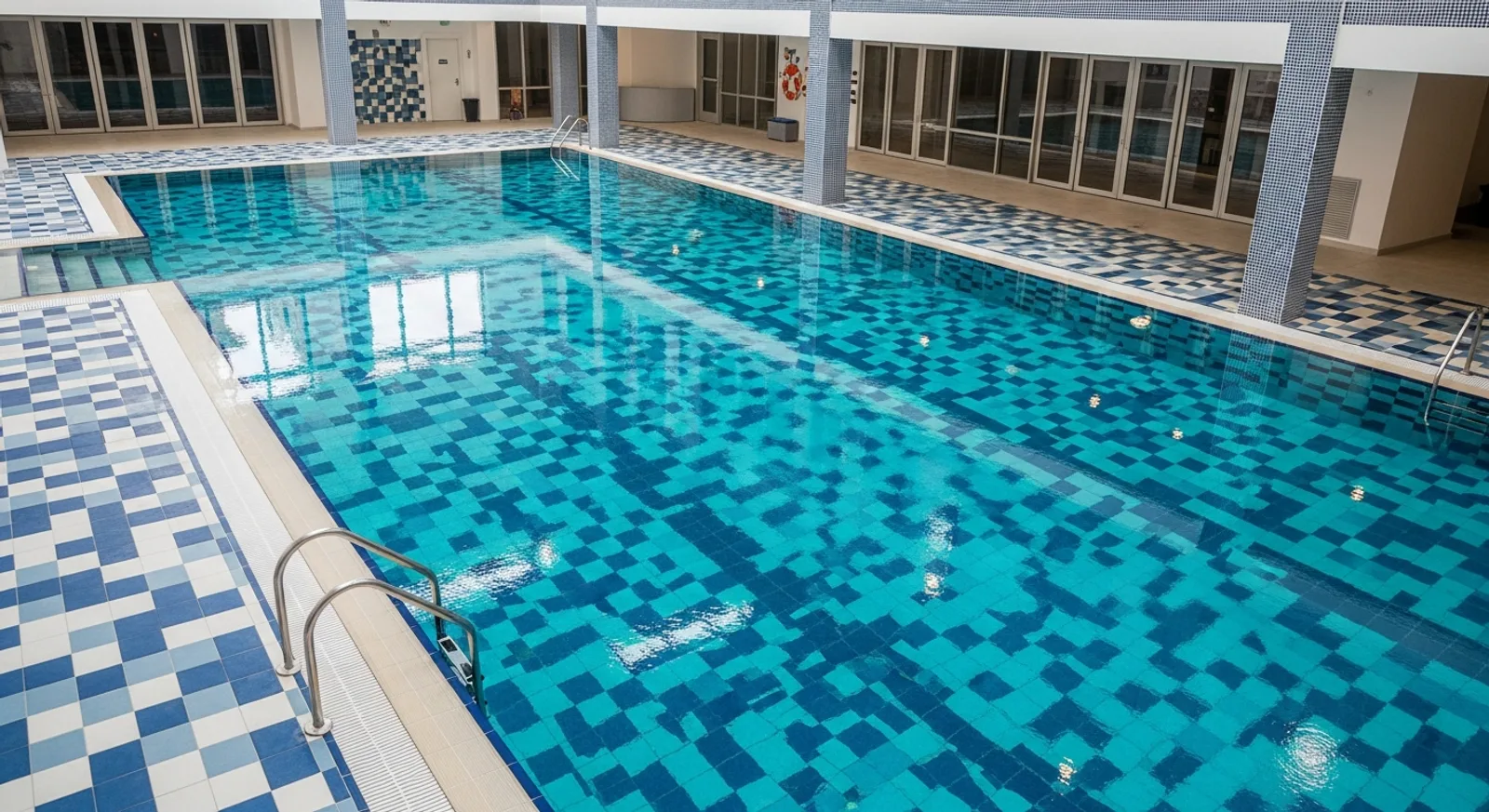
Smart Joint, joint monitoring
The solution developed specifically for the pool: a passive sensor cable in the joint mortar, read out via RFID through the tile.
Learn more
Moisture & corrosion monitoring
Worth considering wherever it concerns the concrete behind the waterproofing: moisture and chloride in the component, before spalling becomes visible.
Learn more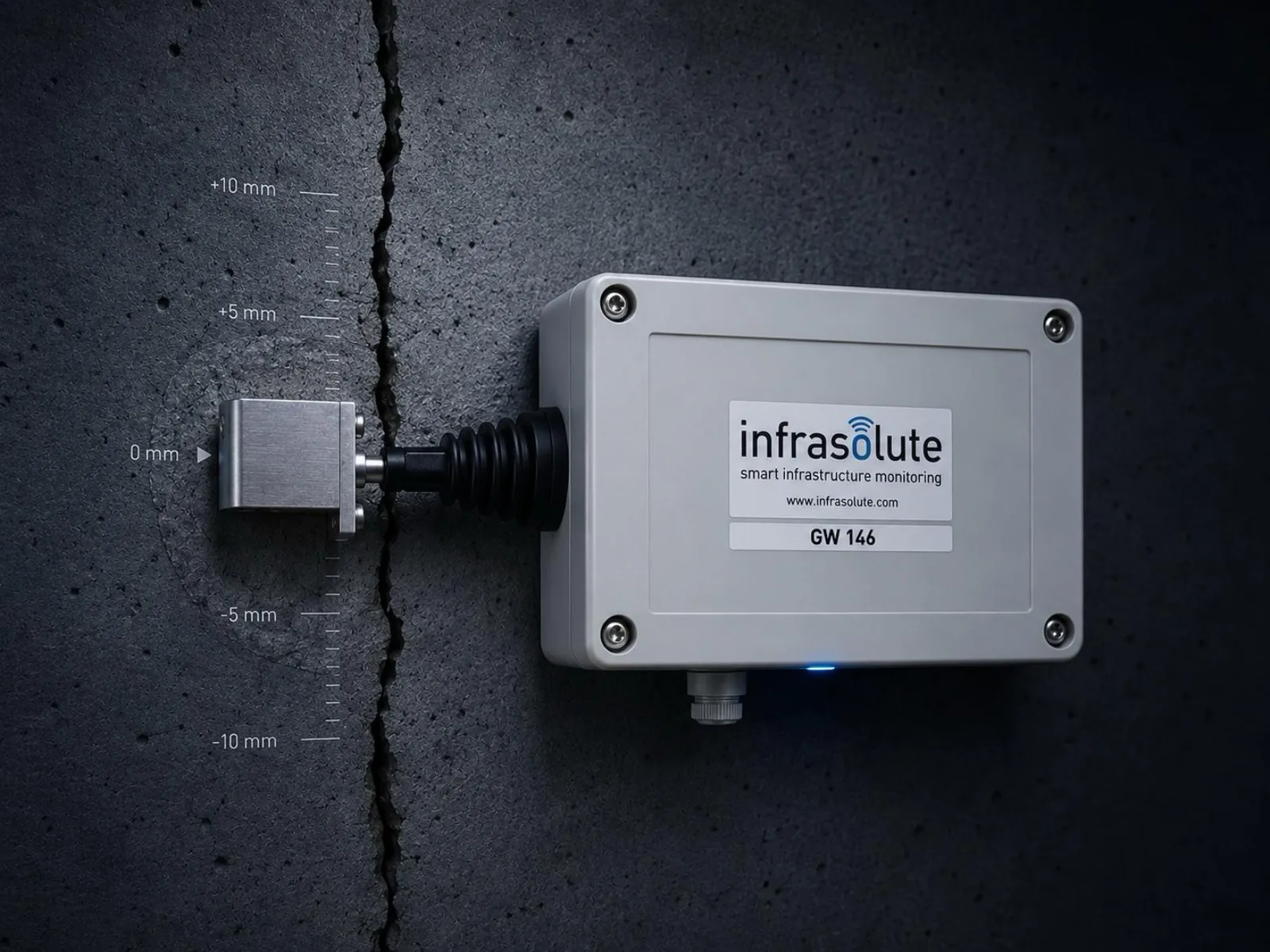
Crack monitoring
Worth considering on components that already show a crack, for instance in the surround or the pool structure. Crack width changes are tracked continuously.
Learn more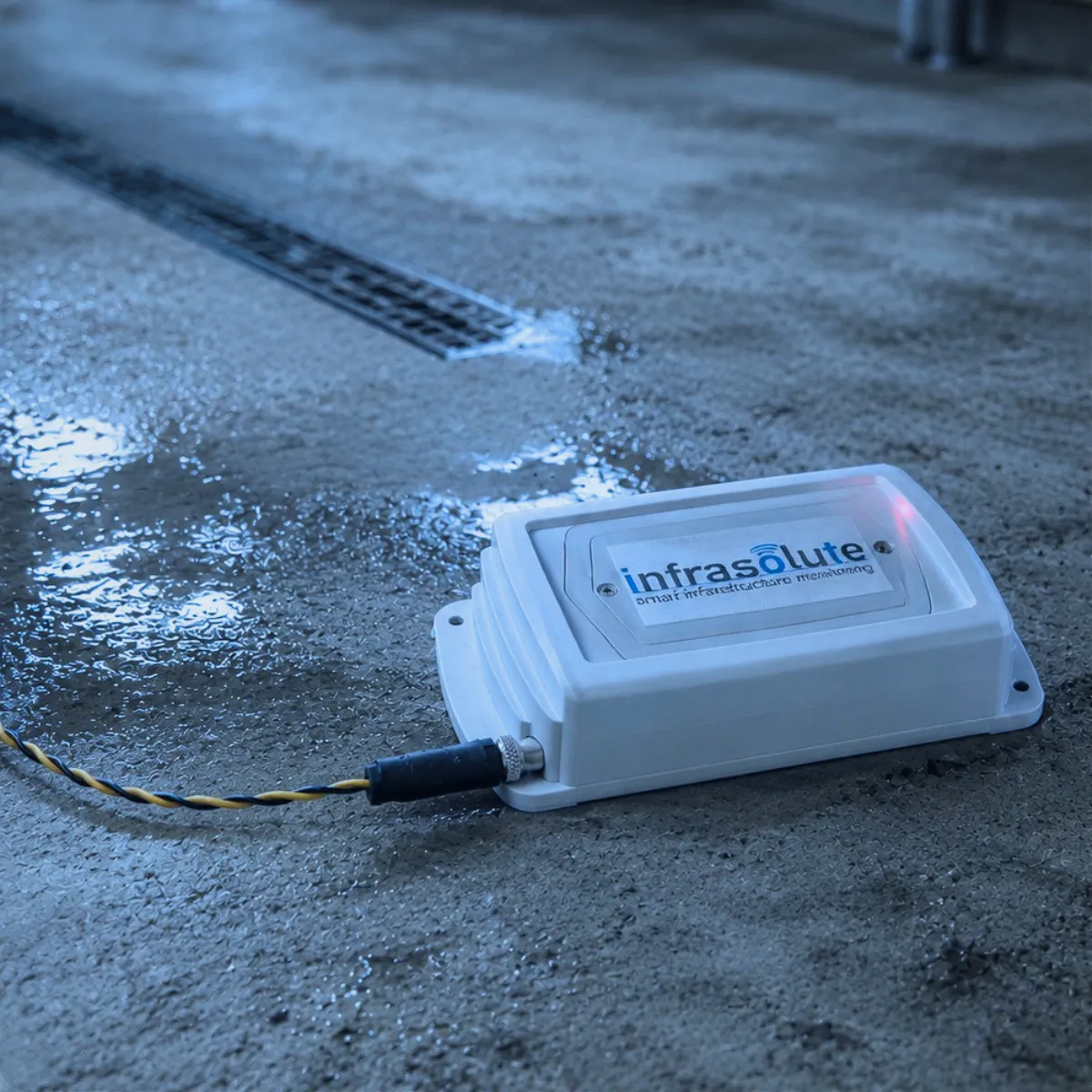
Leak monitoring
Worth considering for plant rooms and pipe runs: a leak detection cable reports escaping water before it is drawn into the construction.
Learn moreWho uses it
Pools where a failure gets expensive
Municipal pools
Indoor and outdoor pools in public ownership, where a closure immediately affects the public.
Hotels and spas
Wellness areas whose failure directly hits revenue.
Therapy and club pools
Pools with a fixed occupancy schedule where a failure cannot be postponed at short notice.
New build and full refurbishment
The most cost-effective time for installation, because the tiling is being newly laid anyway.
The most cost-effective time for installation in the basin is a full refurbishment of the tiling that is already planned. If one is coming up for you, the conversation is worth having beforehand, not afterwards.
Everything from a single source
From the monitoring concept to ongoing operation
You do not get individual parts, but a complete solution and a single point of contact.
Concept
We clarify which areas of the pool are to be monitored and which measured variable is the right one for that.
Learn moreInstallation
On request, we handle the installation, with Smart Joint at the same time as the tiling work.
Learn moreMaintenance and operation
We keep sensor technology and readout operational, so the measurement series does not break off.
Learn moreMonitoring and alert
We observe the readings and report every anomaly to the responsible party.
Learn moreMatching sensors
This sensor technology is installed in the pool
Moisture ingress and chloride load are the critical parameters here. Two devices cover them.
ProductsLeak detection cableReports water contact along the entire installed length, up to 40 m. ProductsMoisture sensor CorroDec 2GPassive RFID sensor for moisture directly in the concrete, energy-free and long-lasting.
Monitoring for your pool
Tell us about the age, construction and upcoming measures. We will tell you what can be monitored and when installation is most cost-effective.
 Benedikt Seuss
Data platform
All readings on one platform
The sensors transmit their readings wirelessly to the data platform, where they are evaluated, documented and continuously checked against your thresholds.
- AI-assisted data analysis
- User-focused reporting
- Continuous evaluation
- Warning and alarm thresholds
- Alerts by email and text message
- Remote access around the clock
- AI-assisted data analysis Condition within limits
- User-focused reporting Report ready
- Alerting Thresholds monitored
Frequently asked questions about monitoring in swimming pools
Can an existing pool be retrofitted?
Does the sensor technology disrupt pool operation?
Which areas of a pool can be monitored?
Does the sensor technology in the pool need a power connection?
Are there reference pools?
Project inquiry
Let's talk about your pool
Whether new build, full refurbishment or ongoing operation: tell us about the starting situation. You will receive a prompt assessment of which monitoring is worthwhile.
+49 6742 8599600 DE +41 41 670 00 11 CH info@infrasolute.com